
Jump to section
This guide will explain the conditions for whether or not you will need planning permission for a shed in your garden, and how to go about getting permission if you need it. The same rules will also apply to other types of garden buildings such as summerhouses, log cabins, greenhouses, and garden rooms.
The rules in this guide apply to England. Note that this is information only, not legal advice.
Do You Need Planning Permission for a Shed?
Short answer (England): You usually don’t need planning permission for a garden shed if it meets all of the following conditions:
- Single-storey
- Height limit within 2 m of a boundary, total height must not exceed 2.5 m.
- If further away:
- lowest part of the roof (eaves) maximum height 2.5 m
- highest part of the roof (ridge) maximum 4 m (dual pitched roof) or 3 m (other roof types).
- No more than 50% of the land around the original house should be covered by outbuildings.
- Not in the front garden (in front of the “principal elevation” of the home).
- No raised platform higher than 30cm (some children’s playhouses may be affected).
- Not used for overnight accommodation or living quarters.
If you meet all of the above: Your shed is a permitted development under English law — no planning permission required.
If you don’t meet all of the above: You may require planning permission.
Extra rules apply for listed buildings, designated land, and Article 4 areas. Always check with your local planning authority if unsure.
In Scotland, the rules are very similar to the above but with different measurement numbers applied to height and boundary distances. (More details below.)
All our garden sheds are under these height limits.
If you’re reading this, you might be shopping for a new shed. In that case, check out our shed buying guide for help with comparing the myriad of options out there.
What is the Maximum Size Shed Without Planning Permission in the UK?
Up to 50% of your outdoor space can be taken up by outdoor building developments without planning permission (as long as other rules are met). Other building developments include any greenhouses, playhouses, conservatories, extensions or other work that have been done since the property was built (or, for older properties, since July 1948).
In Scotland, the 50% rule is strictly applied to the rear curtilage of the property only, as opposed to 50% of the entire outdoor curtilage of the property in England and Wales.
Wooden sheds, log cabins and other wooden buildings may have other rules applied if they have over 15 square metres of internal space, due to their combustible materials. More on this in our Building Regulations section below.
What Counts as an Outbuilding?
The planning permission rules apply to developments, not every object you could possibly insert into your garden. But there are some very small sheds out there, which are basically just boxes with doors. So, when is the shed a building, and when is it just a box?
The answer is based partly on an old court case. If it’s small and light enough to lift and carry off intact, it may count as a chattel rather than a building — in which case putting it there isn’t a development at all, and likely won’t require planning permission in any circumstances. Courts weigh three things: size, permanence, and attachment to the ground (Cardiff Rating Authority v Guest, Keen and Baldwin’s, 1949, confirmed by the Supreme Court in 2020). Being unbolted isn’t enough on its own — a marquee taken down for four months a year was still held to be a building.
⚠️ Special Considerations
Some properties have stricter rules for garden development. If you live in one of the following, the standard “permitted development” rules might not apply.
1. Designated Land
This includes National Parks, the Broads, Areas of Outstanding Natural Beauty, conservation areas, and World Heritage Sites.
- Side of the house: Outbuildings located to the side of your house are not permitted development (you will need planning permission).
- Further away: Any buildings, enclosures, or containers placed more than 20 metres from any wall of the house must not exceed 10m² in total area. (i.e. No massive barns at the bottom of a long garden).
2. Listed Buildings
A listed building is designated as having high national importance (historic or architectural).
- The Rule: You will almost certainly require planning permission for any garden shed or outbuilding.
- Next steps: Don’t let this deter you! Obtaining planning permission is a standard process, but you must consult your local planning authority and fully investigate the rules before purchasing a structure.
Planning Permissions for Other Garden Buildings
The permitted development rules outlined above apply to almost all standard outbuildings (even climbing frames!). However, if you are planning a specific type of garden building, we have created dedicated guides covering their unique edge cases and regulations:
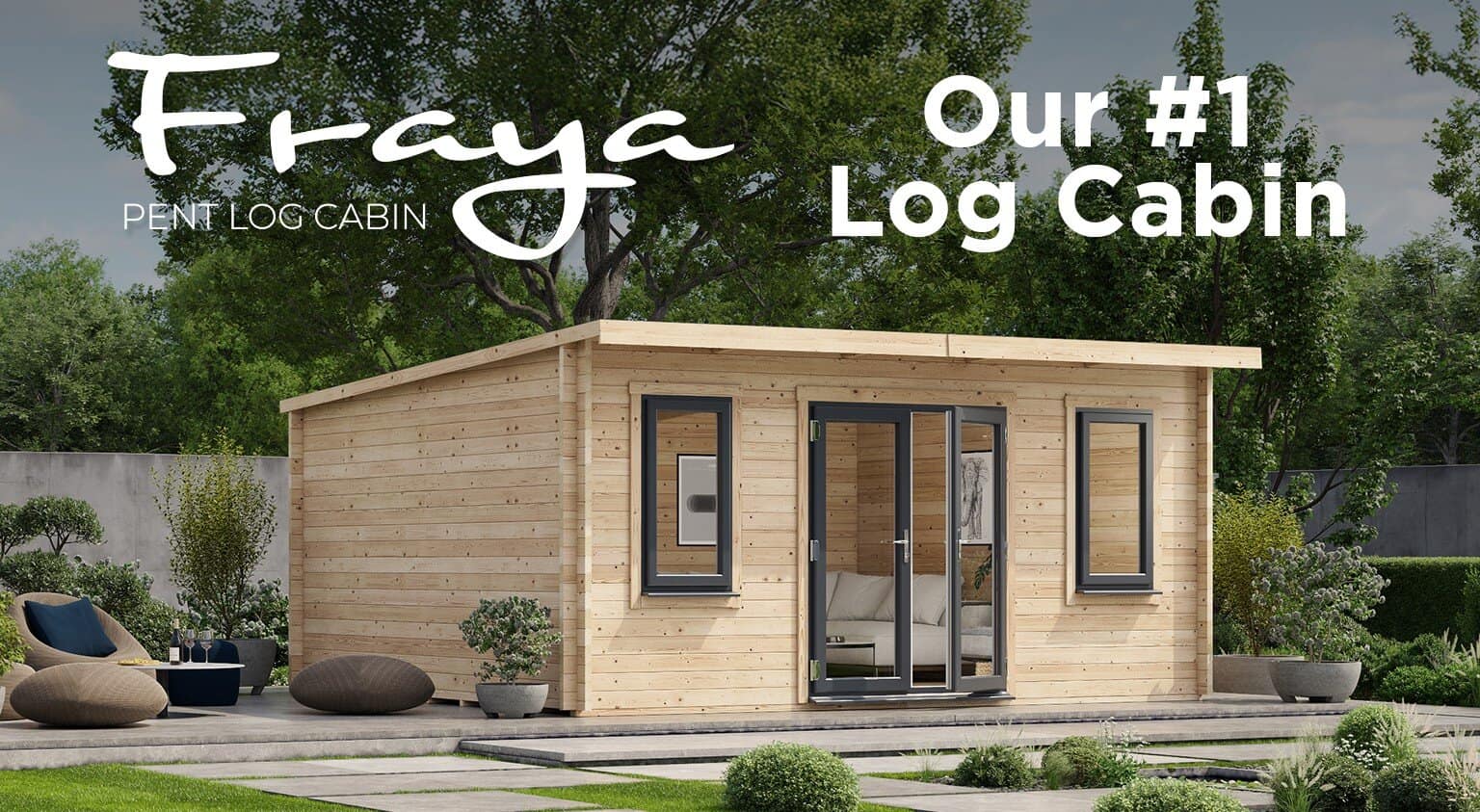
- Log Cabins & Garden Rooms – Essential reading if you plan to use your building as a home office, gym, or business space.
- Summerhouses – Planning a garden retreat? Check the placement and height rules here.
- Greenhouses – Glasshouses follow standard rules, but front-garden placement is a strict exception to watch out for.
Quick Note on Garden Offices
If you are just working from home, you likely don’t need planning permission. However, if you are running a customer-facing business, having goods delivered, or manufacturing products, this may count as a “material change of use” and require planning permission.
Shop Garden Offices →
Planning Permission for Children’s Playhouses
In general, wooden playhouses follow the exact same permitted development rules as garden sheds (they must be under 2.5m tall if placed near a boundary, not in the front garden, etc.).
However, there is one crucial rule that catches many parents out: Raised Platforms.
- The 30cm Rule: If your children’s playhouse includes a raised platform, deck, or stilt base that is higher than 30cm, it does not fall under permitted development.
- The Outcome: You will need to apply for planning permission for any tower playhouse or two-storey structure with a raised platform exceeding this height. There have been cases of families ordered to remove playhouses because of this rule. Always ask your council first!
What if you Do Need Planning Permission?
A planning application to receive planning permission needs to be made to your local planning authority (LPA) or through a planning portal.
A householder application for a shed needs four things:
- The application form, from your LPA’s website or the Planning Portal
- Site plans and drawings showing the shed’s design, size and position relative to your house
- A written description explaining what it’s for and how it fits local planning policy
- The fee — householder applications in England start at £548 (as of April 2026)
Your LPA has eight weeks to decide. They’ll weigh the impact on neighbours, environmental considerations and local planning policy, then issue a formal decision notice.
If approved, the notice is your consent to build. Read any conditions attached to it carefully — they’re binding.
If refused, the notice sets out why. You then have two routes. Amending the scheme to address the stated reasons and reapplying is usually faster and more likely to succeed than fighting the decision. Alternatively you can appeal to the Planning Inspectorate — but for a householder application you have only 12 weeks from the date on the decision notice, and that deadline is absolute. Appeals are decided on written representations and typically take several months.
Garden Outbuilding Planning Permission in Scotland
If you want to build a shed or log cabin in your garden in Scotland, the rules are similar to England’s but with different height limits and boundary distances.
-
Your shed must be behind the house (not in front of the principal elevation).
-
It can usually be built without planning permission if it’s no more than 4 m high, or 2.5 m high when within 1 m of a boundary.
-
The eaves height must not exceed 3 m.
-
Outbuildings must leave at least half of the garden undeveloped.
-
Stricter rules apply in conservation areas, National Parks, and around listed buildings, where the permitted footprint can drop to 4–8 m².
-
Flats and maisonettes don’t have these permitted development rights.
If you’re unsure, always check with your local planning authority before building — especially if your property is in a protected area.
Round-up
Getting planning permission for sheds in England may seem complicated. But then again, it’s essential to follow the rules and meet local regulations. Make sure to understand the requirements, stick to timelines and budgets, and be ready for potential appeals.
Whatever your shed is for, getting the approvals ensures it’s legal, adds value, and serves its purpose. By planning carefully and following the rules, your dream shed can become a reality.
For more information, check out these resources
Log Cabin Planning Permission – This quick guide breaks down everything you need to know about building rules for even more types of garden building.
When Do You Need Planning Permission? – A UK Gov guide to planning permission.
Planning Permission for Trees – This helpful guide provides suggestions regarding tree protection during property construction.
Planning Permission for Farms – Review the rules of planning permissions when building outbuildings on farmland.
Obtaining Planning Permission – This public service video from UKELA explains how to obtain planning permission.
Building Regulation Exemptions – This resource explains the Building Regulations 2010, which outlines the types of work that are exempt from Building Regulations.
Planning Breaches – An explanation of what happens when you fail to obtain or comply with planning permission.
Breach of Condition Notices – A breach of conditions notice will require property owners to secure planning permission compliance.
FAQs
Does a shed need to be 1 metre from a boundary?
No, but you need to consider the height. If your shed is within 2 metres of a boundary, no part of the building can be taller than 2.5m under permitted development rules. Most standard garden sheds, including ours, stay under that limit. (Just make sure the base doesn’t raise it higher.)
Tip: For wooden sheds, leave about 24 inches of clearance around all 4 sides. That gives you room for future maintenance and airflow to help it stay dry and free of pests.
The 1 metre rule applies for larger buildings (over 15m²) made from combustible materials, such as wood. For these larger buildings, if placed within 1 metre of a boundary, Building Regulations will apply to ensure fire safety (to prevent fires from spreading to neighbours or wildlife). In these cases, Building Regulation approval is required, which may involve altering your plans or construction.
This guide covers more details: How Close Can Your Shed Be to a Fence?
Do sheds need to be on concrete?
No, but they do need a solid, level base for stability and full support underneath the structure.
Concrete is a strong, long-lasting material, which is why many people choose it. Other options include paving slabs, timber frame bases, or plastic grid systems.
Learn more:
Does a shed need to meet building regulations?
Usually, no — but it depends on size and use. Small detached sheds used for storage are often exempt from building regulations (for example, under 15m² with no sleeping accommodation, and some 15–30m² buildings if they’re at least 1m from the boundary or substantially non-combustible).
Important: if you add electrics, they must comply with Part P.
Can you put a shed straight onto grass?
You can, but it’s not recommended.
Grass and soil shift over time and hold moisture. That can cause the shed to move, become uneven, or develop moisture damage. A proper base helps it last longer and keeps doors aligned.
Get more expert advice here: Building a Shed on Grass
Does a shed add value to your home?
It can, as long as it’s well-maintained. Buyers often see that as a bonus and a selling point. Here’s a guide on what you can expect: Does a Shed Add Value to Your Home?
sales@gardenbuildingsdirect.co.uk Copyright Garden Buildings Direct Blog 2026. All rights reserved.